Engineering Division
The Engineering Division emphasizes close interaction between students and faculty, and offers a wide range of opportunities to conduct research, complete hands-on design projects and study abroad.
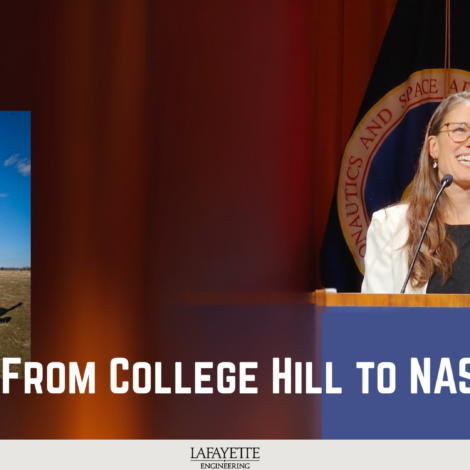
2025 Resnik Lecture:
Rated as one of the Best Undergraduate Engineering Programs by U.S. News and World Report, engineering at Lafayette not only provides an outstanding technical education, but also prepares students with the ability to think creatively, imagine broadly, communicate effectively and influence change.
Among “20 Best Colleges for Women in STEM” in the U.S.
- In rankings announced Aug. 25, Lafayette College has been named America’s fifth best college for women in chemical engineering and sixth best college for women in mechanical and civil engineering. The rankings were compiled by Washington Monthly, a publication based in the Washington, D.C. area covering public affairs. Read more.
National Leader in Study Abroad for Engineers

Upcoming Events
All Upcoming EventsEvents loading...
From news.lafayette.edu
All Recent News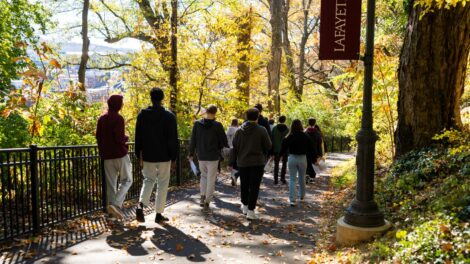
Mar 30, 2026
Inside the Classroom: Where curiosity and engineering judgment meet
In ES 101, budding Lafayette engineers gain an appreciation of classic engineering skills and the art of design

Mar 17, 2026
Engineering success on and off the court
On the basketball court, in the classroom, or out serving the community, Teresa Kiewiet ’27 approaches her every endeavor with a winning mentality
Feb 10, 2026
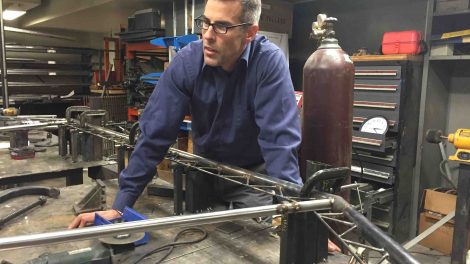
A mentorship that builds more than bridges
With genuine displays of mutual respect and informality Prof. Steve Kurtz has created an ever-widening community of students and alums that supports one…
Recent News
More From Engineering News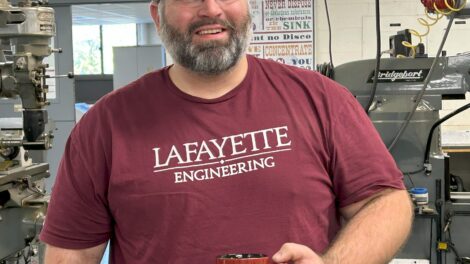
Oct 28, 2025
Rob Layng to Host New “Daily Grind” Podcast for Cutting Tool Engineering
Robert Layng, engineering technician in Lafayette’s Engineering Division, works closely with students in the labs helping with hands-on learning and projects…

Sep 17, 2025
Ani Khachadourian ’25 Awarded Fulbright, Scores on and off the Field
Ani Khachadourian ’25, a graduate in civil and environmental engineering and previous member of the women’s soccer team, has been awarded a prestigious…

Aug 21, 2025
Four Lafayette Engineers Named Tau Beta Pi Scholars
Four Lafayette Engineering seniors have been awarded Tau Beta Pi (TBP) scholarships to support their final year of undergraduate study: Sophia (Bella)…



Engineering Programs
The programs are grounded in Lafayette’s traditional strength in discipline-specific engineering and complemented by the College’s excellence in the liberal arts.
Learn more about the engineering programs.Explore the engineering programs


Contact Information
Engineering Division
308 AEC
740 High St.
Easton, Pa 18042
engineering@lafayette.edu
740 High St.
Easton, Pa 18042
engineering@lafayette.edu
Jenn Stroud Rossmann Professor and William Jeffers Dean of Engineering